
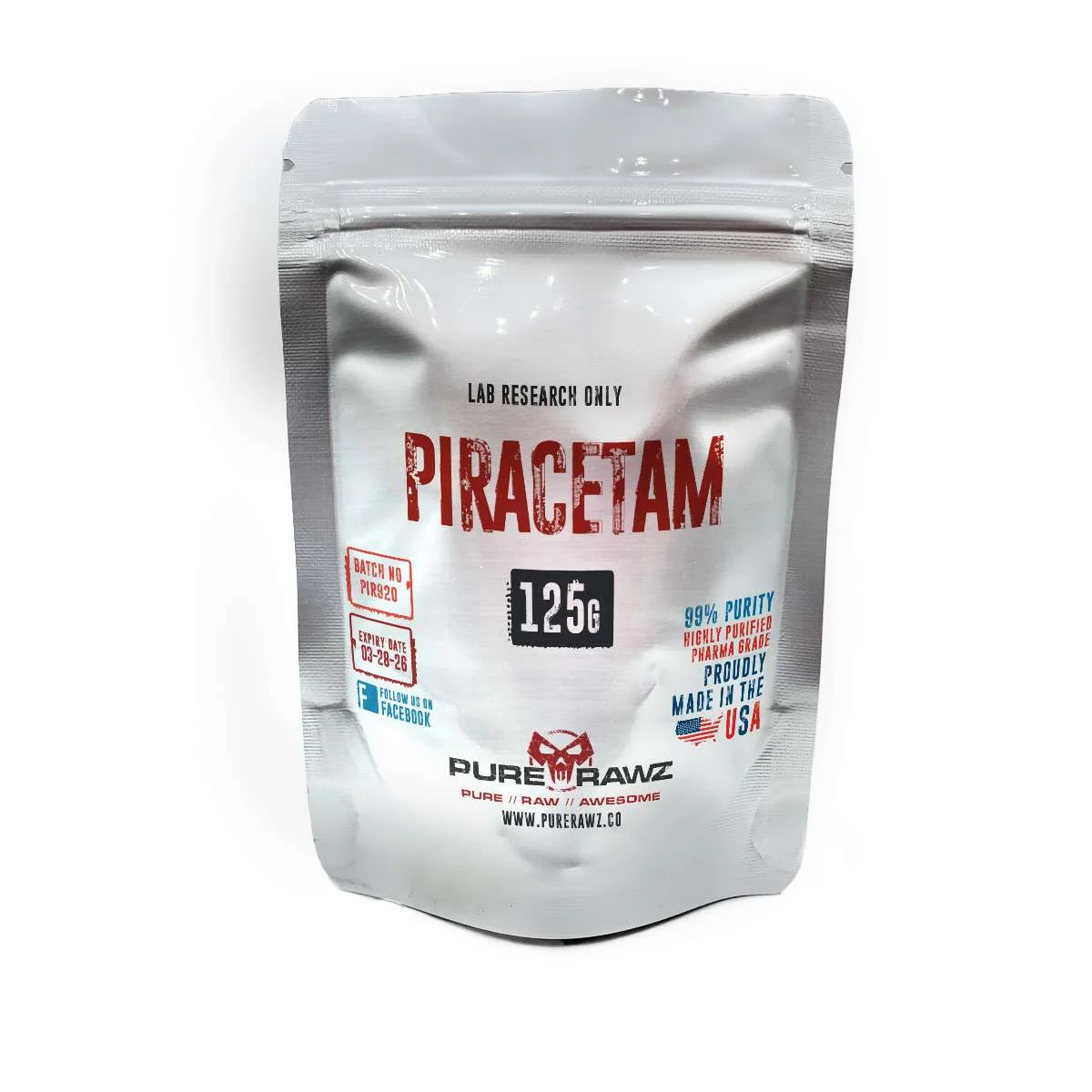
Buy Piracetam for Laboratory Research
Piracetam is a synthetic compound belonging to the racetam family of research compounds. Originally developed as one of the earliest members of the racetam class, Piracetam has been extensively investigated in biochemical, molecular, and neuroscience research models.
Researchers study Piracetam to examine cellular membrane properties, mitochondrial function, neurotransmitter signaling, and molecular pathways involved in neuronal communication. PureRawz supplies research-grade Piracetam with quality documentation and analytical verification for laboratory research applications.
Overview of Piracetam
Piracetam, chemically known as 2-(2-oxopyrrolidin-1-yl)acetamide, is a synthetic nootropic-class research compound. It is structurally characterized by a pyrrolidone nucleus and is considered the foundational compound of the racetam family.
Due to its unique molecular structure, Piracetam has been widely studied in controlled experimental settings focused on:
- Cellular membrane dynamics
- Mitochondrial signaling pathways
- Neurotransmitter interaction models
- Synaptic communication research
- Molecular neuroscience investigations
Piracetam is supplied exclusively for laboratory research use and is not intended for human or veterinary applications.
Proposed Mechanism of Action
Membrane Fluidity Research
Experimental research suggests that Piracetam may interact with cellular membrane structures. Researchers investigate how changes in membrane flexibility influence neuronal and mitochondrial function in laboratory models.
Studies involving membrane biophysics examine how racetam compounds may affect membrane organization, lipid dynamics, and cellular communication processes.
Mitochondrial Function Studies
Piracetam has been examined in research models investigating mitochondrial activity, including studies involving membrane potential, cellular energy metabolism, and ATP production pathways.
Researchers evaluate how compounds affecting mitochondrial systems may influence oxidative stress responses and cellular resilience under controlled experimental conditions.
Neurotransmission Signaling Research
Laboratory investigations have explored Piracetam interactions with neurotransmitter-related systems, including cholinergic and glutamatergic signaling pathways.
Research models examine molecular communication involving:
- Acetylcholine-associated pathways
- Glutamate signaling systems
- AMPA receptor-related mechanisms
- Synaptic signaling processes
These mechanisms are based on experimental research findings and do not represent clinical or therapeutic claims.
Chemical Properties of Piracetam
| Property | Information |
|---|---|
| Compound Name | Piracetam |
| PubChem CID | 4843 |
| CAS Number | 7491-74-9 |
| Molecular Formula | C6H10N2O2 |
| Molecular Weight | 142.16 g/mol |
| IUPAC Name | 2-(2-oxopyrrolidin-1-yl)acetamide |
| Synonyms |
2-Oxo-1-pyrrolidineacetamide; 2-(2-Oxopyrrolidin-1-yl)acetamide; 1-Acetamido-2-pyrrolidinone |
| Chemical Classification | Racetam Research Compound |
| Purity | 99% Purity |
| Storage | Controlled room temperature 15°C–30°C (59°F–86°F) |
Research Applications of Piracetam
Cellular Membrane Research
Researchers utilize Piracetam in experimental systems investigating membrane structure, lipid organization, and cellular signaling responses.
Mitochondrial and Metabolic Studies
Piracetam is examined in laboratory models focused on mitochondrial activity, energy metabolism, oxidative pathways, and cellular function.
Neuroscience Research
Experimental neuroscience studies investigate Piracetam interactions with molecular pathways involved in neuronal signaling and synaptic communication.
Synaptic Signaling Analysis
Researchers use Piracetam in controlled models to explore glutamatergic and cholinergic signaling pathways associated with cellular communication.
Why Choose PureRawz for Piracetam?
- Research-grade Piracetam material
- High purity specifications
- Batch documentation available
- Certificate of Analysis (COA) verification
- Secure laboratory packaging
- Reliable research supply sourcing
PureRawz provides Piracetam exclusively for scientific and laboratory research applications conducted by qualified researchers.
Frequently Asked Questions
What is Piracetam?
Piracetam is a synthetic racetam-class compound investigated in laboratory research involving membrane biology, mitochondrial pathways, and neurotransmission signaling.
What is Piracetam used for in research?
Researchers study Piracetam in experimental models involving cellular membranes, mitochondrial activity, neurotransmitter systems, and molecular neuroscience pathways.
How is Piracetam quality verified?
Research compounds may be evaluated through analytical testing methods, with documentation such as Certificates of Analysis available for verification.
Is Piracetam intended for human consumption?
No. Piracetam supplied by PureRawz is intended strictly for laboratory and research purposes and is not approved for human or animal use.
Research Disclaimer
This information is provided for educational and scientific reference purposes only and does not constitute medical advice.
Products supplied by PureRawz are intended strictly for laboratory and research use. Research must follow applicable institutional guidelines, including IRB or IACUC oversight where required.
Verify information independently before purchasing. By completing your order, you agree to the PureRawz Terms and Conditions.
For customer support, contact:
support@purerawz.co
ATTENTION: All products are for LABORATORY AND RESEARCH PURPOSES ONLY, not for veterinary or human use.
References
- Muller W., Eckert G., & Eckert A. (1999). Piracetam: novelty in a unique mode of action. Pharmacopsychiatry, 32(S1), 2-9.
- Noorbala A.A., Akhondzadeh S., Davari-Ashtiani R., & Amini-Nooshabadi H. (1999). Piracetam in the treatment of schizophrenia: implications for the glutamate hypothesis. Journal of Clinical Pharmacy and Therapeutics, 24(5), 369-374.
- Winblad B. (2005). Piracetam: A review of pharmacological properties and clinical uses. CNS Drug Reviews, 11(2), 169-182.
Related Research Compounds
Researchers studying Piracetam may also explore related neuroscience research compounds, including
Phenylpiracetam,
Noopept, and
FLModafinil, which are investigated in laboratory studies involving neuronal signaling and cognitive research pathways.
Additional research compounds include
Selank,
Semax, and
Bromantane, studied in experimental neuroscience and biochemical research models.




Reviews
There are no reviews yet.