
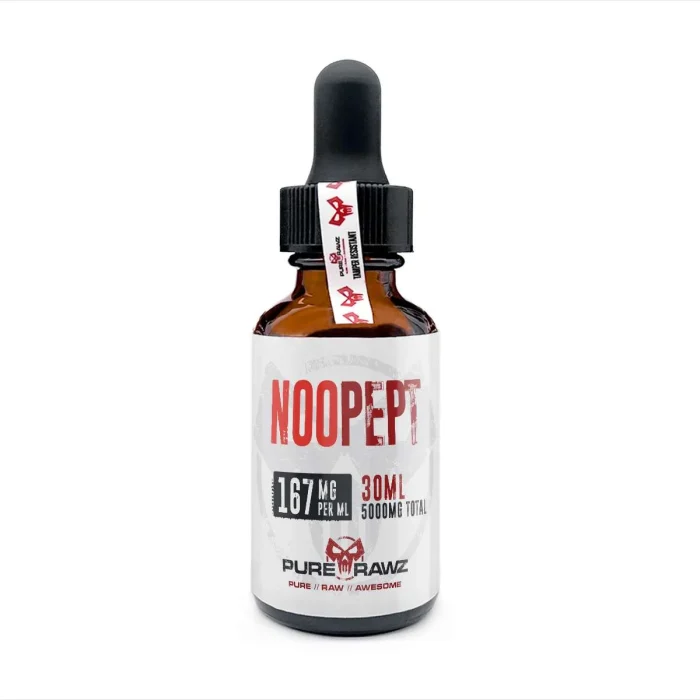
Buy Noopept for Laboratory Research
Noopept, chemically known as N-phenylacetyl-L-prolylglycine ethyl ester, is a synthetic dipeptide-derived research compound widely investigated in molecular neuroscience, neurochemical signaling, and synaptic communication studies. Structurally related to racetam-associated cognitive research compounds, Noopept possesses a unique dipeptide backbone and phenylacetyl functional group that has made it an important reference material in laboratory research.
Researchers continue to investigate Noopept in controlled laboratory settings to better understand molecular pathways involved in neurotransmitter signaling, neurotrophic factor regulation, intracellular communication, and synaptic plasticity. These investigations are limited to experimental research and should not be interpreted as evidence of therapeutic efficacy or approved medical use.
Research Use Only. This product is intended exclusively for laboratory and scientific research and is not intended for human or veterinary use.
What Is Noopept?
Noopept is a synthetic neurochemical research compound also known by the names GVS-111 and Omberacetam. It is frequently used in laboratory investigations examining neuronal signaling pathways, receptor-mediated communication, and molecular mechanisms associated with synaptic function.
Its distinct chemical structure allows researchers to investigate structure-activity relationships and intracellular signaling pathways relevant to neuroscience research under controlled experimental conditions.
Proposed Mechanism of Action
Although the complete molecular profile continues to be investigated, experimental studies suggest that Noopept may interact with several signaling pathways involved in neuronal communication and synaptic regulation.
Glutamatergic Signaling Research
Laboratory investigations have evaluated interactions involving:
- AMPA receptor-associated signaling
- NMDA receptor-associated pathways
- Glutamatergic neurotransmission
- Intracellular calcium signaling
These receptor systems are commonly studied for their role in neuronal communication and synaptic signaling in experimental models.
Neurotrophic Factor Research
Researchers continue investigating Noopept in studies involving neurotrophic signaling pathways, including molecular regulation of:
- Brain-Derived Neurotrophic Factor (BDNF)
- Nerve Growth Factor (NGF)
- Gene transcription pathways
- Protein expression mechanisms
Synaptic Plasticity Research
Cellular studies also examine intracellular kinase signaling, synaptic protein regulation, dendritic communication, and molecular pathways associated with neuronal signaling efficiency.
These mechanistic descriptions are derived from laboratory investigations and do not imply therapeutic benefit or approved clinical applications.
Chemical Properties of Noopept
| Compound Name | Noopept |
| Chemical Name | N-phenylacetyl-L-prolylglycine ethyl ester |
| Synonyms | GVS-111 Omberacetam |
| CAS Number | 157115-85-0 |
| PubChem CID | 180496 |
| Molecular Formula | C17H22N2O4 |
| Molecular Weight | 318.37 g/mol |
| IUPAC Name | Ethyl 2-[[(2S)-1-(2-phenylacetyl)pyrrolidine-2-carbonyl]amino]acetate |
| Appearance | White to off-white powder (batch dependent) |
| Purity | ≥98% (Batch dependent) |
| Storage | Store in a cool, dry laboratory environment protected from moisture and light. |
| Classification | Research Use Only (RUO) |
Possible Research Applications of Noopept
1. Neurotransmitter Signaling Research
Researchers use Noopept to investigate glutamatergic and cholinergic signaling pathways, receptor interactions, and intracellular signal transduction in neuronal research models.
2. Neurotrophic Factor Studies
Experimental investigations examine molecular pathways involving BDNF, NGF, transcriptional regulation, protein expression, and neuronal signaling networks.
3. Synaptic Plasticity Research
Noopept is utilized in molecular assays evaluating synaptic protein expression, dendritic signaling pathways, kinase activation, and intracellular communication involved in synaptic architecture.
4. Preclinical Neuroscience Research
Researchers employ Noopept to investigate receptor modulation, molecular pharmacology, neurochemical signaling, and biochemical pathway interactions within controlled experimental systems.
Why Buy Noopept from PureRawz?
PureRawz supplies high-purity Noopept manufactured for laboratory research. Every batch undergoes comprehensive analytical testing to verify identity, purity, and consistency before distribution.
Available quality documentation includes:
- Certificate of Analysis (COA)
- Third-party purity verification
- Identity confirmation
- Batch consistency testing
- Analytical quality control
Frequently Asked Questions
What is Noopept?
Noopept is a synthetic dipeptide-derived research compound investigated for molecular neuroscience, neurochemical signaling, synaptic communication, and receptor pharmacology research.
What is Noopept researched for?
Researchers study Noopept for glutamatergic signaling, neurotrophic factor regulation, intracellular signaling pathways, synaptic plasticity, and molecular neuroscience investigations.
How is Noopept quality verified?
Quality is verified using analytical methods including identity confirmation, purity analysis, and batch-specific Certificates of Analysis (COAs).
Is Noopept intended for human consumption?
No. Noopept is supplied exclusively for laboratory research and analytical investigations. It is not intended for human or veterinary use.
Research Use Disclaimer
This information is provided solely for educational and scientific purposes and does not constitute medical advice.
Products sold by PureRawz are intended exclusively for laboratory research use. They are not FDA-approved drugs, dietary supplements, foods, cosmetics, or medical devices and are not intended for human or veterinary consumption.
All clinical research must be conducted under the oversight of the appropriate Institutional Review Board (IRB). All preclinical research involving animals must be conducted under the oversight of the appropriate Institutional Animal Care and Use Committee (IACUC) in accordance with the Animal Welfare Act (AWA).
Our content is intended for informational purposes only. By completing and paying for your order, you agree to our Terms and Conditions. Customer satisfaction is our priority. If you are not completely satisfied with your purchase, please contact support@purerawz.co.
ATTENTION: ALL PRODUCTS ARE FOR LABORATORY AND RESEARCH PURPOSES ONLY. NOT FOR HUMAN OR VETERINARY USE.
References
- Ostrovskaya RU, et al. Neuroprotective effect of novel cognitive enhancer Noopept on AD-related cellular model involves the attenuation of apoptosis and tau hyperphosphorylation. Journal of Biomedical Science. 2014. https://doi.org/10.1186/s12929-014-0074-2
- PubChem. Noopept (CID 180496). National Center for Biotechnology Information. https://pubchem.ncbi.nlm.nih.gov/compound/180496
- Taghizadeh M, et al. Noopept and neurotrophic signaling pathways. Heliyon. 2021. (Article subsequently retracted.)
Related Research Compounds
Researchers studying Noopept may also explore related neuroscience research compounds, including
Piracetam,
Phenylpiracetam, and
FLModafinil, which are investigated in laboratory studies involving neuronal signaling and cognitive research pathways.
Additional research compounds include
Selank,
Semax, and
Bromantane, studied in experimental neuroscience and biochemical research models.


Reviews
There are no reviews yet.