
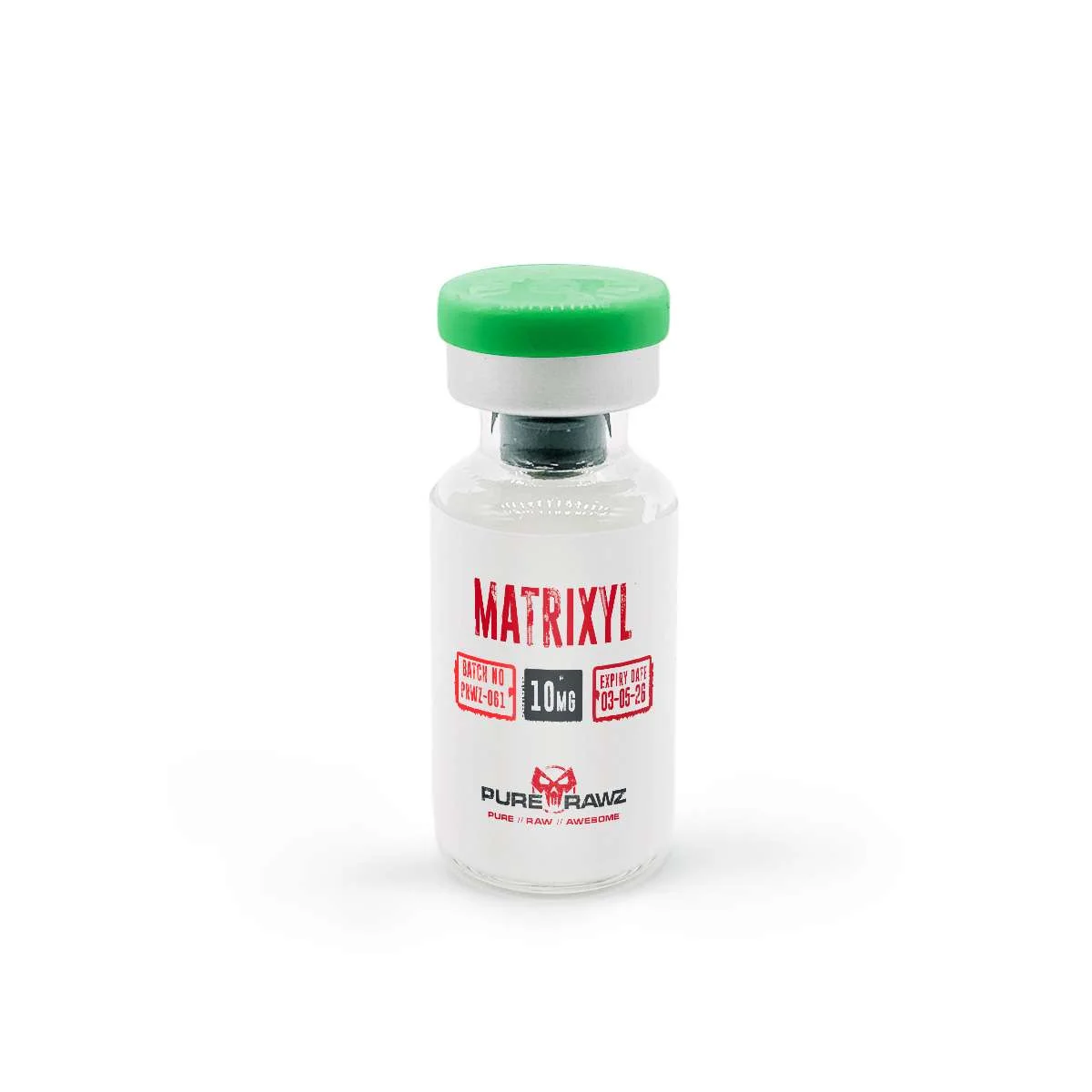

Buy Matrixyl Peptide for Laboratory Research
Matrixyl is a synthetic signal peptide widely investigated in laboratory research involving extracellular matrix biology, peptide-mediated cellular communication, and protein signaling pathways. Originally developed as a matrikine-inspired peptide, Matrixyl has become an important investigational compound for researchers studying cell signaling, extracellular matrix interactions, and peptide structure-function relationships under controlled laboratory conditions.
Researchers continue utilizing Matrixyl in experimental models to better understand molecular mechanisms associated with extracellular matrix regulation, fibroblast signaling, gene expression, and peptide-mediated communication. Its defined amino acid sequence and well-characterized biochemical properties make Matrixyl a valuable research tool in peptide biology.
Research Use Only. This product is intended exclusively for laboratory and scientific research and is not intended for human or veterinary use.
Overview of Matrixyl
Matrixyl commonly refers to Palmitoyl Pentapeptide-4 (Pal-Lys-Thr-Thr-Lys-Ser), a synthetic peptide designed to mimic naturally occurring signaling fragments involved in extracellular matrix research. Laboratory investigations continue examining Matrixyl in studies involving peptide signaling, extracellular protein interactions, and molecular communication.
Current scientific research evaluates Matrixyl as an investigational peptide for understanding cellular responses, protein expression pathways, and extracellular matrix-associated signaling under controlled laboratory environments.
Proposed Mechanism of Action
Published laboratory research suggests Matrixyl functions as a signaling peptide capable of interacting with molecular pathways involved in extracellular matrix biology and cellular communication.
Experimental investigations continue evaluating pathways associated with:
- Peptide-mediated cellular signaling
- Extracellular matrix-associated molecular pathways
- Fibroblast signaling research
- Protein expression regulation
- Cell-to-cell communication
- Gene expression studies
- Peptide structure-activity relationships
These mechanisms remain subjects of laboratory investigation and are not intended to imply therapeutic or clinical activity.
Chemical Properties of Matrixyl
| Compound Name | Matrixyl (Palmitoyl Pentapeptide-4) |
| Sequence | Pal-Lys-Thr-Thr-Lys-Ser |
| Peptide Class | Synthetic Signal Peptide |
| Molecular Formula | C39H75N7O10 |
| Molecular Weight | 802.05 g/mol |
| Synonyms |
Matrixyl Palmitoyl Pentapeptide-4 Pal-KTTKS |
| Purity | ≥98% (Batch Dependent) |
| Appearance | White to off-white lyophilized powder |
Possible Research Applications of Matrixyl
1. Extracellular Matrix Research
Matrixyl is widely investigated for studies examining extracellular matrix-associated signaling pathways, protein interactions, and molecular communication.
2. Cellular Communication Studies
Researchers utilize Matrixyl to evaluate peptide-mediated signaling, intracellular communication, and molecular regulatory mechanisms.
3. Fibroblast Biology Research
Experimental investigations continue examining Matrixyl in laboratory models involving fibroblast signaling, peptide biology, and extracellular protein regulation.
4. Gene Expression Research
Researchers investigate Matrixyl to study peptide-mediated regulation of gene expression and cellular signaling pathways.
5. Structure-Activity Relationship (SAR) Studies
Matrixyl serves as an investigational peptide for understanding how peptide sequence and structural modifications influence biological signaling and molecular interactions.
Why Buy Matrixyl from PureRawz?
Every batch of Matrixyl undergoes comprehensive analytical testing to verify purity, identity, and batch consistency before distribution for laboratory research.
Quality documentation may include:
- Certificate of Analysis (COA)
- High-Performance Liquid Chromatography (HPLC)
- Mass Spectrometry (MS)
- Identity Verification
- Purity Analysis
- Batch Consistency Testing
PureRawz supplies high-quality research peptides manufactured according to strict laboratory quality standards.
Frequently Asked Questions
What is Matrixyl?
Matrixyl is a synthetic signal peptide, commonly known as Palmitoyl Pentapeptide-4, used in laboratory research involving extracellular matrix biology and peptide signaling.
What is Matrixyl researched for?
Researchers investigate Matrixyl to study extracellular matrix signaling, peptide-mediated cellular communication, fibroblast biology, and molecular regulatory pathways.
How is Matrixyl quality verified?
Matrixyl quality is commonly confirmed through HPLC analysis, mass spectrometry, purity testing, identity verification, and batch-specific Certificates of Analysis.
Why is batch consistency important?
Consistent manufacturing and analytical testing help provide reproducible research materials suitable for controlled laboratory investigations.
Is Matrixyl intended for human consumption?
No. Matrixyl is supplied exclusively for laboratory research purposes and is not intended for human or veterinary use.
Research Use Disclaimer
The information provided is intended solely for educational and scientific purposes and should not be interpreted as medical advice, diagnosis, or treatment recommendations.
Products sold by PureRawz are intended exclusively for laboratory research use. They are not FDA-approved drugs, dietary supplements, foods, cosmetics, or medical devices and are not intended for human or veterinary consumption.
Researchers are responsible for complying with all institutional, local, state, and federal regulations, including applicable IRB and IACUC guidelines where appropriate.
ATTENTION: ALL PRODUCTS ARE FOR LABORATORY RESEARCH PURPOSES ONLY. NOT FOR HUMAN OR VETERINARY USE.
References
- Katayama K, Armendariz-Borunda J, Raghow R, et al. A Pentapeptide Promotes Extracellular Matrix Research Through Cell Signaling Mechanisms. Journal of Biological Chemistry.
- Lintner K, Peschard O. Biologically Active Peptides in Experimental Skin and Matrix Research. International Journal of Cosmetic Science.
- PubChem Compound Database: Palmitoyl Pentapeptide-4.
- Scientific literature on matrikines and extracellular matrix signaling.
Related Research Peptides
Researchers studying Matrixyl also explore
Argireline,
GHK-Cu,
Glutathione, and
BPC-157 for peptide and skin biology research.
Additional peptide studies may include
KPV,
TB-500,
Epithalon, and
Melanotan in laboratory peptide research.
Researchers may also compare
Semax,
Selank,
Sermorelin, and
Ipamorelin in experimental peptide signaling models.



Reviews
There are no reviews yet.