
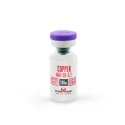
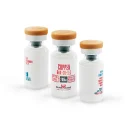
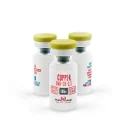
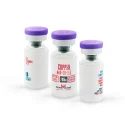
Buy GHK-Cu (Copper Peptide) – Research Use Only
GHK-Cu (Copper Peptide) is a naturally occurring copper-binding tripeptide complex widely studied in laboratory research for its role in cellular signaling, extracellular matrix biology, tissue remodeling, and peptide biochemistry. Researchers investigate GHK-Cu for its interactions with gene expression, connective tissue research, and various biological signaling pathways in controlled laboratory environments.
PureRawz offers GHK-Cu (Copper Peptide) for sale exclusively for qualified laboratory research. Every batch undergoes independent third-party analytical testing with 99%+ HPLC verified purity and includes a Certificate of Analysis (COA), ensuring exceptional quality, consistency, and research reliability.
Research Use Only: This product is intended exclusively for laboratory research purposes. It is not approved for human consumption, veterinary use, therapeutic applications, or diagnostic procedures.
Key Features
- 99%+ purity verified by independent HPLC testing
- Third-party Certificate of Analysis (COA)
- Research-grade copper tripeptide complex
- Premium lyophilized peptide powder
- Manufactured under strict quality control standards
- Research Use Only (RUO)
Potential Research Applications
GHK-Cu is currently being investigated in laboratory and preclinical studies involving:
- Cellular signaling pathway research
- Connective tissue biology investigations
- Extracellular matrix remodeling studies
- Collagen and elastin research
- Angiogenesis and vascular biology research
- Gene expression investigations
- Oxidative stress and cellular biology studies
- Peptide biochemistry research
Mechanism Under Investigation
Preclinical studies suggest that GHK-Cu functions as a biologically active copper-binding peptide capable of interacting with multiple cellular signaling pathways. Researchers continue to investigate its role in extracellular matrix regulation, tissue remodeling, angiogenic activity, and gene expression within controlled laboratory models. Current findings are derived exclusively from laboratory and preclinical research and have not been validated for therapeutic use.
Quality Assurance
PureRawz is committed to supplying premium research peptides for scientific investigation. Every production batch of GHK-Cu undergoes independent third-party analytical testing to verify identity and purity. Batch-specific Certificates of Analysis (COA) are available for every lot to support research reproducibility and laboratory confidence.
Storage Recommendations
- Store lyophilized peptide at −20°C.
- Protect from heat, moisture, and direct sunlight.
- After laboratory reconstitution, refrigerate at 2–8°C.
- Avoid repeated freeze-thaw cycles.
- Use sterile laboratory handling procedures.
Frequently Asked Questions
What is GHK-Cu researched for?
Researchers commonly investigate GHK-Cu for connective tissue biology, extracellular matrix remodeling, collagen research, angiogenesis, cellular signaling, gene expression, and peptide biochemistry.
Is GHK-Cu FDA approved?
No. The research-grade GHK-Cu supplied by PureRawz is an investigational research peptide and is not approved for human or veterinary use.
Does PureRawz provide a Certificate of Analysis?
Yes. Every production batch includes independent HPLC testing and a Certificate of Analysis (COA).
How should GHK-Cu be stored?
Store lyophilized GHK-Cu at −20°C. After reconstitution for laboratory use, refrigerate at 2–8°C and avoid repeated freeze-thaw cycles.
Important Disclaimer
Research Use Only: GHK-Cu (Copper Peptide) is supplied exclusively for laboratory and scientific research. This product is not intended for human consumption, veterinary use, diagnosis, treatment, cure, or prevention of any disease. Researchers are responsible for complying with all applicable institutional, local, and national regulations.
Related Research Peptides
Researchers studying GHK-Cu (Copper Peptide) also explore
BPC-157,
TB-500,
KPV, and
Matrixyl for peptide research.
Additional peptide studies may include
Argireline,
Epithalon,
Glutathione, and
Melanotan in laboratory investigations.
Researchers may also compare
CJC-1295 with DAC,
Ipamorelin,
Sermorelin, and
AOD-9604 in peptide signaling research.
Reviews
There are no reviews yet.