
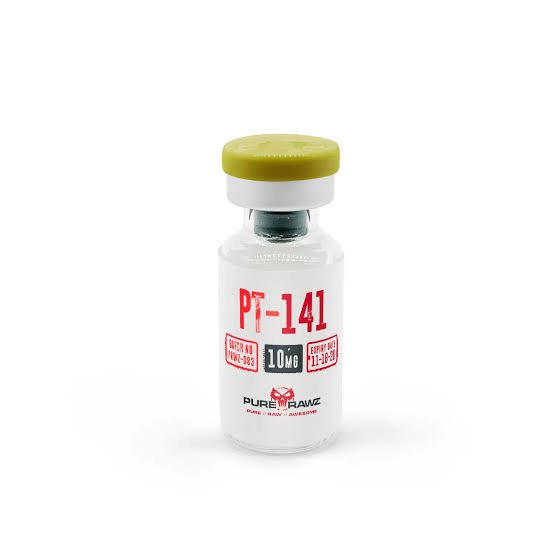
Buy PT-141 (Bremelanotide) for Laboratory Research
PT-141, also known as Bremelanotide, is a synthetic melanocortin receptor agonist developed from the naturally occurring peptide hormone alpha-melanocyte-stimulating hormone (α-MSH). It has become an important investigational peptide for researchers studying melanocortin receptor signaling, receptor selectivity, and downstream intracellular communication under controlled laboratory conditions.
Researchers continue to investigate PT-141 because of its interaction with multiple melanocortin receptor subtypes, particularly MC3R and MC4R. These receptors have been examined in studies involving neuroendocrine signaling, receptor pharmacology, and peptide-mediated cellular responses. PT-141 remains an important research tool for evaluating melanocortin receptor biology in preclinical laboratory models.
Research Use Only. This product is intended exclusively for laboratory research and analytical applications. It is not intended for human or veterinary use.
Overview of PT-141
PT-141 (Bremelanotide) is a synthetic cyclic peptide structurally derived from α-MSH while incorporating modifications that improve receptor selectivity and stability for research applications. Unlike endogenous α-MSH, PT-141 has been extensively investigated as a selective agonist of melanocortin receptors involved in intracellular signaling pathways.
Current research focuses on understanding how PT-141 interacts with melanocortin receptor subtypes and how receptor activation influences second messenger systems, neuronal communication, and receptor-mediated molecular signaling.
As research advances, PT-141 continues to be utilized as an investigational peptide for studying melanocortin receptor pharmacology and peptide-receptor interactions.
Proposed Mechanism of Action
Research suggests PT-141 functions as an agonist of several melanocortin receptors, with particular affinity toward:
- MC3R
- MC4R
- MC1R (to a lesser extent)
Following receptor binding, laboratory studies suggest activation of G-protein coupled signaling pathways may stimulate:
- Adenylyl cyclase activation
- Increased intracellular cyclic AMP (cAMP)
- Protein kinase A (PKA) signaling
- Transcription factor regulation
- Receptor-mediated intracellular communication
Researchers continue investigating how PT-141 influences receptor signaling kinetics, ligand affinity, receptor desensitization, and downstream molecular responses under controlled experimental conditions.
Chemical Properties of PT-141
| Compound Name | PT-141 (Bremelanotide) |
| Peptide Class | Synthetic Melanocortin Receptor Agonist |
| Molecular Formula | C50H68N14O10 |
| Molecular Weight | 1025.2 g/mol |
| CAS Number | 189691-06-3 |
| Synonyms |
PT-141 Bremelanotide Bremelanotide Acetate |
Possible Research Applications of PT-141
1. Melanocortin Receptor Research
PT-141 may be utilized to investigate melanocortin receptor activation, receptor selectivity, ligand affinity, and receptor signaling dynamics in preclinical research models.
2. GPCR Signaling Studies
Researchers use PT-141 to examine G-protein coupled receptor activation, intracellular cAMP production, and downstream signaling pathways associated with melanocortin receptors.
3. Neuroendocrine Signaling Research
PT-141 may serve as an investigational tool for evaluating peptide-mediated communication within neuroendocrine signaling networks.
4. Receptor Pharmacology
Laboratory studies continue exploring PT-141 for receptor binding characteristics, agonist activity, receptor specificity, and pharmacodynamic properties.
5. Peptide Structure-Activity Relationship (SAR) Studies
Researchers investigate PT-141 to better understand how structural peptide modifications influence receptor affinity, signaling duration, and biological activity.
Frequently Asked Questions
What is PT-141?
PT-141 (Bremelanotide) is a synthetic melanocortin receptor agonist derived from α-MSH and studied extensively in laboratory research involving receptor signaling and peptide pharmacology.
How does PT-141 work in research?
Research indicates PT-141 may activate melanocortin receptors, leading to intracellular cAMP signaling and downstream molecular pathways examined in controlled laboratory environments.
Why is PT-141 studied?
Researchers investigate PT-141 to better understand melanocortin receptor biology, peptide-receptor interactions, receptor pharmacology, and intracellular signaling mechanisms.
Is PT-141 intended for human consumption?
No. PT-141 is supplied strictly for laboratory and scientific research purposes only and is not intended for human or veterinary use.
Research Use Disclaimer
The information provided is intended solely for educational and scientific purposes and should not be interpreted as medical advice, diagnosis, or treatment recommendations.
All products sold by PureRawz are intended exclusively for laboratory research use. They are not drugs, foods, cosmetics, dietary supplements, or medical devices and are not intended for human or veterinary consumption.
Researchers are responsible for complying with all applicable institutional, local, state, and federal regulations, including IRB and IACUC guidelines where appropriate.
By purchasing from PureRawz, customers acknowledge that these materials are intended solely for qualified laboratory professionals conducting legitimate scientific research.
ATTENTION: ALL PRODUCTS ARE FOR LABORATORY RESEARCH PURPOSES ONLY. NOT FOR HUMAN OR VETERINARY USE.
References
- Millington GWM. Alpha-melanocyte-stimulating hormone: Production and degradation. Journal of Endocrinology. 2010;206(3):271-281.
- Catania A, Airaghi L, Colombo G, Lipton JM. Alpha-melanocyte-stimulating hormone in normal human physiology and disease states. Trends in Endocrinology & Metabolism. 2000;11(8):304-308.
- Thody AJ. Alpha-MSH and the regulation of melanocyte function. Annals of the New York Academy of Sciences. 1999;885:217-229.
- Hadley ME, Dorr RT. Melanocortin peptide therapeutics. Peptides. 2006.
- PubChem Compound Database: Bremelanotide (PT-141).
Related Research Peptides
Researchers studying PT-141 also explore
Melanotan,
Oxytocin,
KPV, and
GHK-Cu for peptide signaling research.
Additional peptide studies may include
BPC-157,
TB-500,
Epithalon, and
DSIP in laboratory peptide investigations.
Researchers may also compare
Semax,
Selank,
CJC-1295 with DAC, and
Ipamorelin in experimental peptide research.
Reviews
There are no reviews yet.